

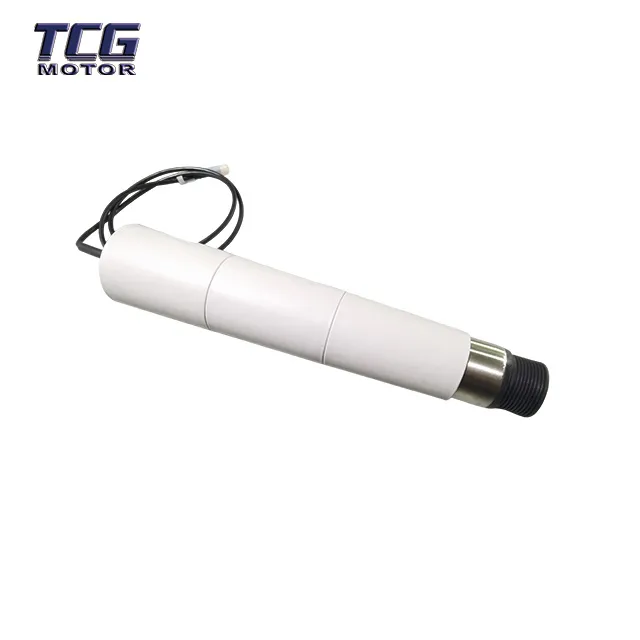


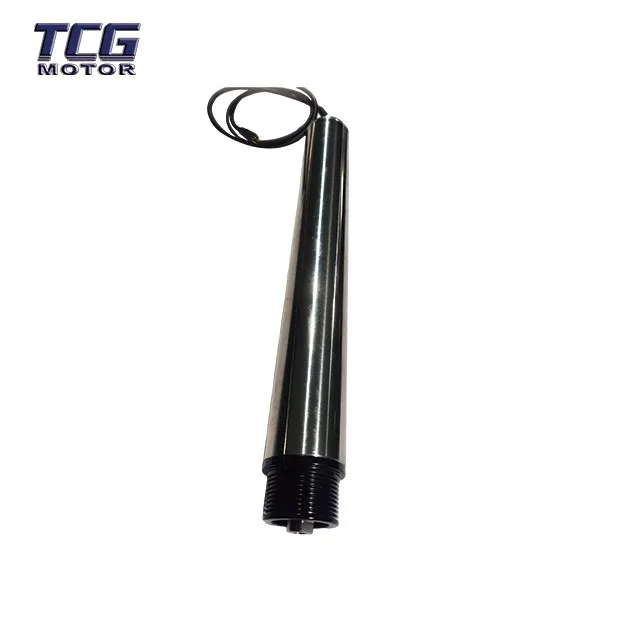

V-belt Conveyor Motor
DC Series V-belt conveyor motors have a wide range of applications in multiple fields and scenarios. The following are the main application scenarios and specific applications of drum motors:
|
Motor horse |
30w---1000w |
Insulation Class |
F |
|
Voltage |
12/24/48V |
Wind material |
100% Copper |
|
Currency |
DC Brushed |
Material |
Stainless 304 |
|
Frequency |
50/60hz |
Warranty |
12 months |
|
Output RPM |
30--2000rpm |
HS CODE |
8501109990 |
|
Cast material |
Aluminum |
Roller type |
V-belt |
|
Roller length |
40---300mm |
Specification |
Standard or Customized |
|
Protection Class |
IP68 |
Original |
China |
|
Duty |
S1 |
Noise |
Lower than 50Db |
Product Introduction:
The V-belt Conveyor Motor is motor drive systems that use V-belts to transmit power to conveyors, typically for material handling applications.
Applications

1. Logistics industry:
In logistics conveying systems, drum motors are widely used in airport baggage check-in, railway cargo transfer, port container transportation, and other applications. They efficiently transport bulk goods, improve logistics efficiency, and reduce labor costs.
2. Mining industry:
In mining operations, drum motors are commonly used in equipment such as mine hoists, scraper conveyors, and crushers. They provide stable power output, enabling continuous and efficient mineral extraction.


3. In the field of agriculture:
In some farms and horticultural centers, drum motors are used for irrigation and water pumping. By controlling water flow and pressure, farmers can manage water resources more effectively and improve crop yield and quality.
4. Medical facilities:
In hospitals and other medical facilities, drum motors are used to transport critically ill patients and assist with rehabilitation training. Additionally, drum motors provide stable and reliable power support in operating rooms and intensive care units.


5. Manufacturing industry:
On production lines, drum motors quickly and efficiently transport materials from one location to another, improving production efficiency.
6. Construction industry:
On construction sites, drum motors are used to lift heavy objects and enhance work efficiency.


7. Urban transportation:
In urban transportation, drum motors serve as auxiliary equipment in public transit systems to improve efficiency.
Feature:
Efficient Power Transmission
The V-belt Conveyor Motor use a V-belt design featuring a unique wedge-shaped cross-section that enhances friction and ensures efficient, stable transmission of motor power to the conveyor. Compared to flat belt transmission, V-belt transmission efficiency improves by approximately 5% to 8%, reducing energy loss and boosting overall system performance.
Adapted for Complex Working Conditions
Our motor design incorporates an effective heat dissipation system, using optimized air ducts and high thermal conductivity materials to maintain motor temperature within a safe range during continuous operation, preventing overheating and performance decline. The transmission components are precision-machined, and vibration and noise levels are kept at least 30% below industry standards, ensuring smooth equipment operation and minimizing downtime caused by mechanical failures.
FAQ
Q: What is a V-belt conveyor motor?
A: A V-belt conveyor motor is an electric motor designed to drive conveyor belts using a V-shaped belt that connects the motor pulley to the conveyor pulley, enabling power transmission.
Q: Why use a V-belt in conveyor systems?
A: V-belts offer efficient power transmission, reduce slippage, and provide flexibility in speed adjustment, making them ideal for conveyor systems.
Q: What types of motors are commonly used in V-belt conveyors?
A: Induction motors (single-phase or three-phase) and sometimes DC motors are commonly used to power V-belt conveyors.
Q: How does the V-belt affect conveyor motor performance?
A: The V-belt influences torque transmission and speed; proper tension and alignment ensure smooth operation and prevent motor overload or belt wear.
Q: What factors determine the motor size for a V-belt conveyor?
A: Load weight, conveyor length, belt speed, friction, and start-up torque requirements determine the appropriate motor size.
Q: How is motor speed controlled in V-belt conveyor systems?
A: Motor speed can be adjusted by changing the pulley diameter ratio or using a variable frequency drive (VFD) for precise speed control.
Q: What maintenance is required for a V-belt conveyor motor?
A: Regular inspection of the belt tension, alignment, lubrication of motor bearings, and cleaning to prevent dust buildup are key maintenance tasks.
Q: Can V-belt conveyor motors be used in harsh environments?
A: Yes, with proper motor enclosures (e.g., IP55 or higher), V-belt conveyor motors can operate reliably in dusty, wet, or corrosive environments.
Q: What causes V-belt slippage, and how can it be prevented?
A: Slippage occurs due to incorrect belt tension, worn belts, or pulley misalignment. Preventing slippage requires regular belt tension checks and alignment adjustments.
Q: What advantages do V-belt conveyors with motors offer over direct drive conveyors?
A: They provide easier maintenance, flexible speed adjustments, and can absorb shock loads better, reducing motor stress and extending equipment life.
Hot Tags: v-belt conveyor motor, China v-belt conveyor motor manufacturers, factory, conveyor roller motor, AC Series Conveyor Motor, DC Series Conveyor Motor, V belt Conveyor Motor, Liner Conveyor Motor, Double Shaft Conveyor Motor


Send Inquiry
