

What kind of lubricant should be used for a planetary gearbox?
Aug 25, 2026
As a planetary gearbox supplier, I often receive inquiries from customers about the appropriate lubricants for their planetary gearboxes. The choice of lubricant is crucial as it directly impacts the performance, efficiency, and lifespan of the gearbox. In this blog, I will discuss the factors to consider when selecting a lubricant for a planetary gearbox and recommend some suitable types of lubricants.
Factors to Consider When Selecting a Lubricant
1. Viscosity
Viscosity is one of the most important properties of a lubricant. It determines the lubricant's ability to form a protective film between the gear teeth. In a planetary gearbox, the lubricant needs to have the right viscosity to ensure proper lubrication under different operating conditions. If the viscosity is too low, the lubricant may not be able to form an effective film, leading to increased wear and friction. On the other hand, if the viscosity is too high, it can cause excessive power loss and heat generation.
The viscosity of a lubricant is typically measured at two different temperatures: 40°C and 100°C. The ISO viscosity grade system is commonly used to classify lubricants based on their viscosity at 40°C. For planetary gearboxes, a lubricant with a viscosity grade ranging from ISO VG 100 to ISO VG 320 is usually recommended, depending on the operating speed, load, and temperature.
2. Load Capacity
Planetary gearboxes often operate under high loads, so the lubricant needs to have good load-carrying capacity. The load-carrying capacity of a lubricant is determined by its ability to prevent metal-to-metal contact between the gear teeth under high pressure. This is usually achieved through the use of additives such as anti-wear agents and extreme pressure (EP) additives.
Anti-wear agents form a protective film on the gear surfaces, reducing friction and wear. Extreme pressure additives react with the metal surfaces under high pressure to form a sacrificial layer, preventing the gears from seizing or scoring. When selecting a lubricant for a planetary gearbox, it is important to choose one that contains the appropriate additives to ensure sufficient load-carrying capacity.
3. Temperature Resistance
Planetary gearboxes can generate a significant amount of heat during operation, especially under high loads and high speeds. Therefore, the lubricant needs to have good temperature resistance to maintain its performance over a wide temperature range. A lubricant with poor temperature resistance may break down or oxidize at high temperatures, leading to a loss of lubrication and increased wear.
Synthetic lubricants are often preferred for planetary gearboxes because they offer better temperature resistance compared to mineral oils. Synthetic lubricants can maintain their viscosity and lubricating properties at higher temperatures, reducing the risk of thermal degradation. They also have better oxidation resistance, which helps to extend the lifespan of the lubricant.
4. Compatibility
The lubricant should be compatible with the materials used in the planetary gearbox, including the gears, bearings, and seals. Incompatible lubricants can cause damage to the components, leading to premature failure. For example, some lubricants may react with certain types of seals, causing them to swell or harden, which can lead to leakage.
Before using a new lubricant, it is important to check the manufacturer's recommendations to ensure compatibility with the gearbox components. If necessary, a compatibility test can be conducted to verify the suitability of the lubricant.
Suitable Types of Lubricants for Planetary Gearboxes
1. Mineral Oils
Mineral oils are the most commonly used lubricants for planetary gearboxes. They are relatively inexpensive and offer good lubrication performance under normal operating conditions. Mineral oils are available in a wide range of viscosity grades, making it easy to select the appropriate one for a specific application.
However, mineral oils have some limitations. They have poor temperature resistance compared to synthetic lubricants and may require more frequent oil changes. They also have a higher tendency to oxidize and form sludge, which can reduce the efficiency of the gearbox.
2. Synthetic Lubricants
Synthetic lubricants are becoming increasingly popular for planetary gearboxes due to their superior performance. They offer better temperature resistance, oxidation resistance, and load-carrying capacity compared to mineral oils. Synthetic lubricants can also reduce friction and wear, leading to improved efficiency and longer component lifespan.
There are several types of synthetic lubricants available, including polyalphaolefins (PAOs), esters, and polyglycols. PAOs are the most commonly used synthetic lubricants for planetary gearboxes because they offer a good balance of performance and cost. Esters are known for their excellent lubricity and biodegradability, while polyglycols are often used in applications where high water resistance is required.
3. Semi-Synthetic Lubricants
Semi-synthetic lubricants are a blend of mineral oils and synthetic lubricants. They offer some of the benefits of both types of lubricants, such as improved temperature resistance and load-carrying capacity compared to mineral oils, at a lower cost than fully synthetic lubricants. Semi-synthetic lubricants are a good option for applications where the operating conditions are not too severe.
Recommended Lubricants for Different Applications
1. General Industrial Applications
For general industrial applications, a synthetic lubricant with a viscosity grade of ISO VG 150 to ISO VG 220 is usually recommended. This type of lubricant offers good temperature resistance and load-carrying capacity, making it suitable for a wide range of operating conditions.
2. High-Speed Applications
In high-speed applications, a lubricant with a lower viscosity grade, such as ISO VG 100, may be required to reduce power loss and heat generation. Synthetic lubricants are often preferred for high-speed applications due to their better temperature resistance and lubricity.
3. Heavy-Duty Applications
For heavy-duty applications, a lubricant with a higher viscosity grade, such as ISO VG 320, and a high load-carrying capacity is recommended. Synthetic lubricants with extreme pressure additives are often used in heavy-duty applications to ensure reliable operation under high loads.
Conclusion
Selecting the right lubricant for a planetary gearbox is essential to ensure its optimal performance and longevity. When choosing a lubricant, it is important to consider factors such as viscosity, load capacity, temperature resistance, and compatibility. Synthetic lubricants are often the preferred choice for planetary gearboxes due to their superior performance, but mineral oils and semi-synthetic lubricants can also be suitable depending on the application.
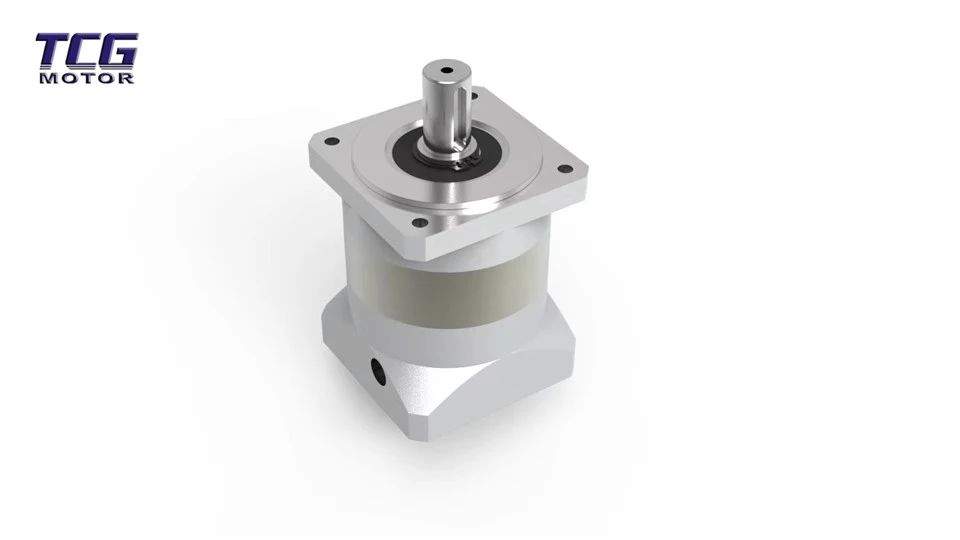
At our company, we offer a wide range of High Precision Planetary Reducer and Super High Precision Planetary Gearbox products. Our gearboxes are designed to meet the highest standards of quality and performance, and we can provide professional advice on lubricant selection to ensure the best results for your application. If you are interested in learning more about our planetary gearboxes or have any questions about lubricant selection, please feel free to contact us for a purchase negotiation.

References
- Machinery's Handbook, 31st Edition
- Tribology Handbook, Second Edition
- Gear Design and Application, Third Edition