

How does the battery voltage affect the performance of a DC carbon brushed motor?
Dec 03, 2025
Hey there! As a supplier of DC carbon brushed motors, I've seen firsthand how battery voltage can have a huge impact on motor performance. In this blog, I'm gonna break down the relationship between battery voltage and the performance of DC carbon brushed motors, and why it matters for you as a customer.
Let's start with the basics. A DC carbon brushed motor works by using an electric current to create a magnetic field, which then interacts with the motor's permanent magnets to produce rotational motion. The battery provides the electrical energy needed to power the motor. The voltage of the battery determines the strength of the electric current flowing through the motor, and this, in turn, affects the motor's performance.
Speed
One of the most noticeable ways that battery voltage affects a DC carbon brushed motor is its speed. Generally speaking, the higher the battery voltage, the faster the motor will spin. This is because a higher voltage provides more electrical energy, which allows the motor to generate a stronger magnetic field and produce more torque. As a result, the motor can overcome the resistance in the system more easily and rotate at a higher speed.
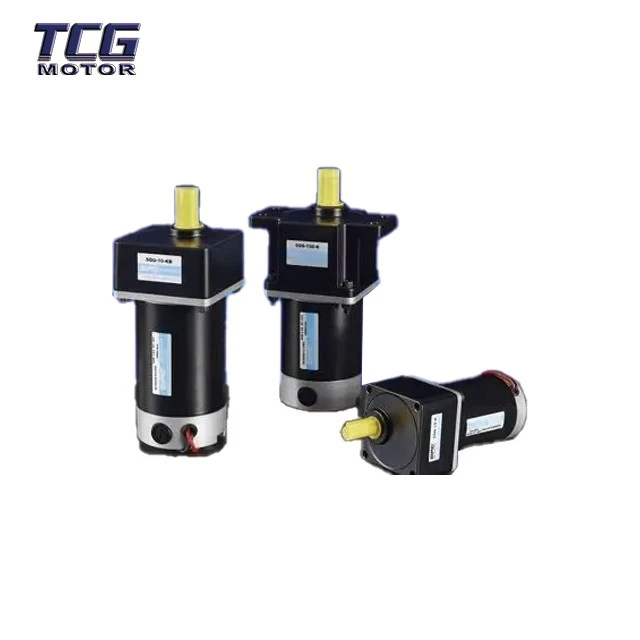

For example, if you have a Low RPM DC Brushed Motor running on a 6V battery, it might spin at a relatively slow speed. But if you increase the battery voltage to 12V, the motor will likely spin much faster. However, it's important to note that there are limits to how much you can increase the voltage. If you exceed the motor's rated voltage, you could damage the motor or cause it to overheat.
Torque
Torque is another important performance parameter that is affected by battery voltage. Torque is the rotational force that the motor can produce, and it's what allows the motor to do work, such as driving a fan or a conveyor belt. Similar to speed, a higher battery voltage generally results in more torque.
When the voltage is increased, the current flowing through the motor also increases. This increased current creates a stronger magnetic field, which in turn produces more torque. So, if you need a motor to perform a heavy-duty task, like lifting a heavy load, you might want to consider using a higher voltage battery to ensure that the motor has enough torque to get the job done.
However, just like with speed, there are limits to how much torque a motor can produce. If you try to push the motor beyond its torque capacity, it might stall or even burn out. So, it's important to choose a motor that is rated for the amount of torque you need and to use a battery voltage that is appropriate for the motor.
Efficiency
Battery voltage also has an impact on the efficiency of a DC carbon brushed motor. Efficiency is a measure of how well the motor converts electrical energy into mechanical energy. In general, motors tend to be more efficient when they are operating at or near their rated voltage.
When the battery voltage is too low, the motor might not be able to generate enough power to overcome the internal resistance and other losses in the system. This can result in a lower efficiency and more wasted energy. On the other hand, if the battery voltage is too high, the motor might draw more current than it needs, which can also lead to decreased efficiency and increased heat generation.
So, to get the most out of your motor and minimize energy consumption, it's important to use a battery voltage that is within the motor's recommended range. This will help ensure that the motor operates at its peak efficiency and lasts longer.
Heat Generation
Heat generation is a common issue with DC carbon brushed motors, and battery voltage can play a role in how much heat the motor produces. When the motor is operating, some of the electrical energy is converted into heat due to the resistance in the motor's windings and other components.
A higher battery voltage generally means more current flowing through the motor, which can result in more heat generation. If the motor gets too hot, it can damage the insulation on the windings, reduce the motor's efficiency, and even cause the motor to fail prematurely.
To prevent overheating, it's important to choose a motor that is rated for the battery voltage you plan to use and to ensure that the motor has adequate ventilation. You might also want to consider using a heat sink or other cooling methods to help dissipate the heat.
Considerations for Different Applications
The impact of battery voltage on motor performance can vary depending on the specific application. For example, in a DC Brushless Rolling Door Motor with Brake, the speed and torque requirements might be different than in a DC Brushed Small Motor used in a toy or a small appliance.
In a rolling door application, you might need a motor that can provide enough torque to lift the door quickly and smoothly. In this case, a higher voltage battery might be necessary to ensure that the motor has the power it needs. On the other hand, in a small appliance application, you might be more concerned with energy efficiency and quiet operation. In this case, a lower voltage battery might be a better choice.
Conclusion
In conclusion, battery voltage has a significant impact on the performance of a DC carbon brushed motor. It affects the motor's speed, torque, efficiency, and heat generation. By understanding how battery voltage works and how it affects motor performance, you can make more informed decisions when choosing a motor and a battery for your application.
If you're in the market for a DC carbon brushed motor and have questions about battery voltage or any other aspect of motor performance, don't hesitate to reach out. We're here to help you find the right motor for your needs and to ensure that you get the best performance possible. Whether you're looking for a low RPM motor, a motor with a brake, or a small brushed motor, we've got you covered. Let's start a conversation about your requirements and see how we can work together to get the job done right.
References
- Chapman, Stephen J. Electric Machinery Fundamentals. McGraw-Hill Education, 2012.
- Fitzgerald, A. E., Kingsley, C., & Umans, S. D. Electric Machinery. McGraw-Hill, 2003.