

What are the installation dimensions of a V - belt conveyor motor?
Aug 01, 2025
Hey there! As a supplier of V-belt Conveyor Motors, I often get asked about the installation dimensions of these motors. It's a crucial topic because getting the dimensions right is essential for a smooth and efficient conveyor system. So, let's dive into it!
First off, what exactly is a V-belt Conveyor Motor? Well, it's a type of motor used in conveyor systems to drive the belts. These motors are designed to provide the necessary power and torque to move materials along the conveyor. You can learn more about V-belt Conveyor Motor on our website.
Now, let's talk about the installation dimensions. There are several key dimensions that you need to consider when installing a V-belt Conveyor Motor.
Shaft Dimensions
The shaft of the motor is one of the most important parts when it comes to installation. The diameter of the shaft is a critical dimension. It needs to match the pulley on the conveyor system. If the shaft diameter is too small, the pulley may not fit properly, leading to slippage and reduced efficiency. On the other hand, if the shaft diameter is too large, it won't fit into the pulley at all.
Most V-belt Conveyor Motors come with standard shaft diameters. For example, common shaft diameters range from 1/2 inch to 2 inches. But it's always a good idea to check the specifications of your specific motor. You can usually find this information in the motor's datasheet.
Another important shaft dimension is the length. The length of the shaft determines how far the pulley can be positioned from the motor. This is important for proper belt tension and alignment. A shaft that is too short may not allow enough space for the pulley, while a shaft that is too long can cause problems with belt sag and misalignment.
Mounting Dimensions
The mounting dimensions of the motor are also crucial. There are different types of motor mounts, such as foot mounts, flange mounts, and face mounts. Each type has its own set of dimensions.
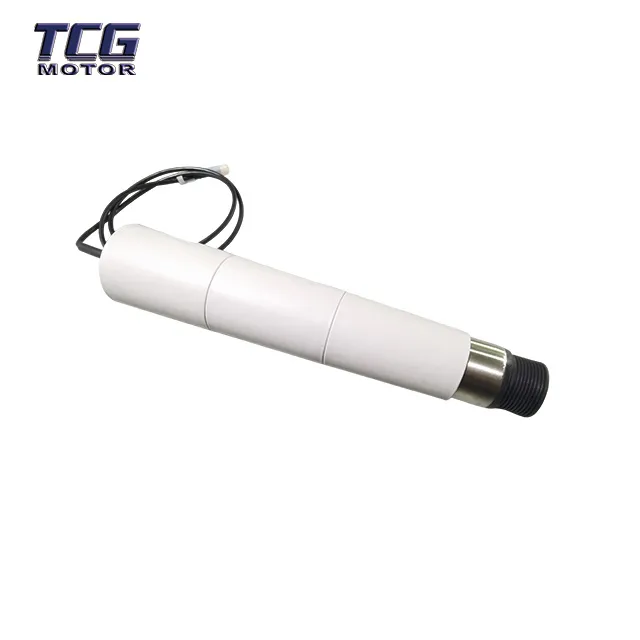

Foot mounts are the most common type of mount for V-belt Conveyor Motors. The mounting holes on the motor's base need to align with the holes on the conveyor frame. The distance between the mounting holes, known as the bolt circle diameter (BCD), is an important dimension. It needs to match the BCD on the conveyor frame.
Flange mounts are used when the motor needs to be mounted directly to a flat surface, such as a gearbox or a conveyor pulley. The diameter of the flange and the pattern of the mounting holes are the key dimensions to consider.
Face mounts are similar to flange mounts, but they are used when the motor needs to be mounted on the end face of a component. The size and pattern of the mounting holes on the face of the motor are important for proper installation.
Overall Dimensions
The overall dimensions of the motor, including its length, width, and height, also need to be considered. These dimensions determine how much space the motor will take up on the conveyor system. You need to make sure that there is enough clearance around the motor for proper ventilation and maintenance.
If the motor is too large, it may not fit into the available space on the conveyor. On the other hand, if the motor is too small, it may not have enough power to drive the conveyor effectively.
Alignment Dimensions
Proper alignment of the motor and the conveyor pulley is essential for the smooth operation of the conveyor system. The alignment dimensions include the parallelism and the angular alignment between the motor shaft and the pulley shaft.
Parallelism refers to the alignment of the two shafts in a parallel direction. If the shafts are not parallel, the belt will experience uneven wear and may slip off the pulley. Angular alignment refers to the alignment of the two shafts at the correct angle. If the angle is incorrect, the belt will also experience uneven wear and may cause excessive vibration.
To ensure proper alignment, you can use alignment tools such as laser alignment systems. These tools can help you measure and adjust the alignment dimensions accurately.
Other Considerations
In addition to the installation dimensions, there are other factors that you need to consider when installing a V-belt Conveyor Motor.
One important factor is the belt tension. The belt needs to be tensioned properly to ensure efficient power transmission. If the belt is too loose, it will slip on the pulley, reducing the efficiency of the conveyor system. If the belt is too tight, it will put excessive stress on the motor and the conveyor components, leading to premature wear and failure.
Another factor is the environmental conditions. If the conveyor system is located in a dusty or wet environment, you need to choose a motor that is suitable for these conditions. For example, you may need a motor with a dustproof or waterproof enclosure.
We also offer other types of conveyor motors, such as AC Series Conveyor Motor and Liner Conveyor Motor. These motors have their own unique installation requirements, but the basic principles of installation dimensions are similar.
If you're in the market for a V-belt Conveyor Motor or any other type of conveyor motor, and you have questions about installation dimensions or any other aspect of our products, don't hesitate to reach out. We're here to help you make the right choice for your conveyor system. Whether you're setting up a new conveyor or upgrading an existing one, we can provide you with the technical support and guidance you need.
Contact us today to start the conversation about your conveyor motor needs. We look forward to working with you to ensure your conveyor system runs smoothly and efficiently.
References
- Manufacturer's datasheets for V-belt Conveyor Motors
- Conveyor system design manuals
- Industry standards for motor installation and alignment