

What are the materials used in a Liner Conveyor Motor?
Oct 31, 2025
Hey there! As a supplier of Liner Conveyor Motors, I'm super excited to dive into the materials used in these nifty motors. You know, liner conveyor motors are the unsung heroes in many industries, keeping things moving smoothly. So, let's take a closer look at what goes into making them tick.
Stator and Rotor Materials
The stator and rotor are the heart and soul of a Liner Conveyor Motor. The stator is the stationary part, while the rotor rotates. For the stator, we often use high - quality electrical steel laminations. These laminations are thin sheets of steel that are stacked together. Why do we use them? Well, electrical steel has low core loss, which means it doesn't waste a lot of energy in the form of heat. This is crucial for the efficiency of the motor. When the motor is running, the magnetic field in the stator causes the rotor to turn. If the stator had high core loss, a significant amount of energy would be lost as heat, and the motor wouldn't be as efficient.

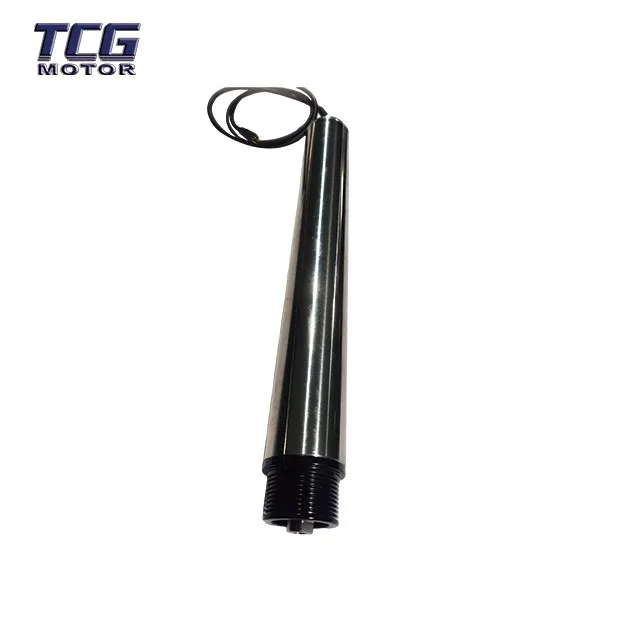
The rotor, on the other hand, can be made from different materials depending on the type of motor. In some cases, we use copper or aluminum bars. Copper is a great conductor of electricity, so it allows for efficient flow of electrical current. This helps in generating a strong magnetic field, which in turn makes the rotor spin faster and more smoothly. Aluminum is also a popular choice because it's lightweight and relatively inexpensive. It still provides good electrical conductivity, although not as high as copper. But for many applications, the cost - effectiveness and light weight of aluminum make it a great option.
Housing Materials
The housing of a Liner Conveyor Motor plays a vital role in protecting the internal components. We usually use cast iron or aluminum for the housing. Cast iron is known for its strength and durability. It can withstand a lot of wear and tear, as well as harsh environmental conditions. In industrial settings where the motor might be exposed to dust, moisture, or vibrations, a cast - iron housing is a great choice. It provides a solid protective shell around the stator and rotor, preventing any damage from external factors.
Aluminum, on the other hand, is lighter than cast iron. This makes it easier to install and move the motor around. It also has good corrosion resistance, which is important if the motor is going to be used in a humid or corrosive environment. For applications where weight is a concern, like in some mobile conveyor systems, an aluminum - housed motor is often the preferred option.
Insulation Materials
Insulation is super important in a Liner Conveyor Motor. It prevents electrical current from leaking out and causing short - circuits. We use various types of insulation materials, such as mica, glass fiber, and epoxy resin. Mica is a natural mineral that has excellent electrical insulation properties. It can withstand high temperatures without losing its insulating ability. This is crucial because motors can get pretty hot during operation.
Glass fiber is another popular insulation material. It's strong and flexible, and it can be easily shaped to fit different parts of the motor. Epoxy resin is often used to bond the insulation materials together and provide an extra layer of protection. It also helps in improving the mechanical strength of the insulation.
Bearings
Bearings are essential for the smooth rotation of the motor shaft. We typically use ball bearings or roller bearings. Ball bearings are great for high - speed applications. They have small balls that roll between the inner and outer races, reducing friction. This allows the shaft to rotate smoothly with minimal energy loss. Roller bearings, on the other hand, are better suited for applications where there is a lot of radial or axial load. They have cylindrical or tapered rollers that can handle heavier loads compared to ball bearings.
Other Components
There are also some other components in a Liner Conveyor Motor that use specific materials. For example, the cooling fan is usually made from plastic or aluminum. Plastic fans are lightweight and inexpensive, while aluminum fans are more durable and can dissipate heat better. The wiring in the motor is made from copper, which, as I mentioned earlier, is an excellent conductor of electricity.
Now, if you're in the market for a Liner Conveyor Motor, we've got a great range of products. You can check out our Liner Conveyor Motor on our website. We also have V - belt Conveyor Motor and Double Shaft Conveyor Motor options available.
If you're interested in learning more about our products or have any questions about the materials used in our motors, don't hesitate to reach out. We're always happy to have a chat and help you find the perfect motor for your needs. Whether you're running a small - scale operation or a large industrial plant, we've got the right solution for you. So, why wait? Let's start the conversation and get your conveyor systems running at their best!
References
- "Electric Motors and Drives: Fundamentals, Types and Applications" by Austin Hughes
- "Motor Handbook" by Arnold Tustin